 (1).png)
Mr SB Viknesan
Learn about counselling and psychological techniques for Gaming Disorder from Mr SB Viknesan, a senior addiction counsellor with over 22 years of experience, at SMHC 2025 on 16 July.
Last updated on 24 June 2026
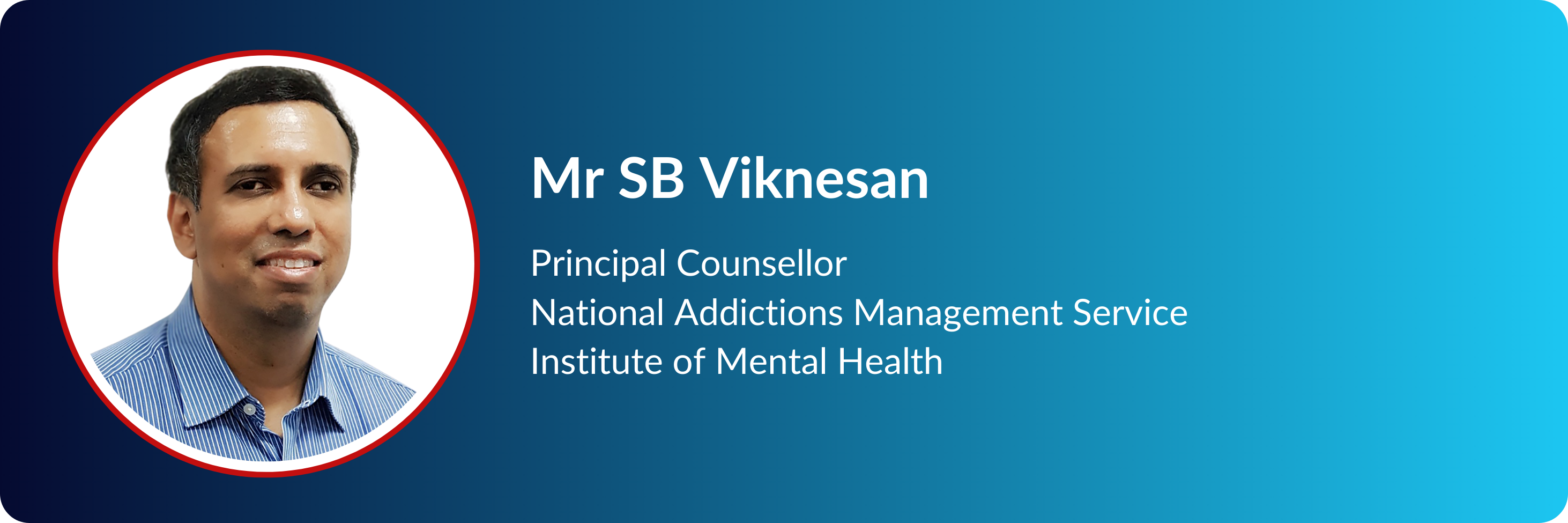
Mr SB Viknesan is a Principal Counsellor at NAMS in IMH. With over 22 years of experience specifically in addiction-related counselling experience, he provides both individual and group counselling to patients dealing with addictions, and is skilled in training programmes, particularly in Motivational Interviewing Addiction related content, Groupwork and Group Facilitation and Clinical Supervision.
Additionally, Viknesan has been an adjunct faculty member at the Singapore University of Social Sciences for over 17 years, teaching addictions and group counselling. He supervises students from multiple universities and holds several leadership roles, including being a Council Member for the National Council Against Drug Abuse and Board Member of the Singapore Anti-Narcotics Association.
He holds a Master’s in Social Sciences in Counselling, a graduate diploma in Educational Psychology and a Bachelor of Science in Psychology. He is certified as a Clinical Supervisor and in various addiction counselling specialities by the Association of Professionals Specialising in Addictions Counselling, a certification Board of IC& RC (USA).
Track Title: The Silent Dependency: Counselling Techniques / Psychological Intervention for Gaming Disorder
Date: 16 July 2025, Wednesday
Time: 5.00 PM
Breakout Session: Track 2 – Emerging Trends & Insights
Synopsis
Gaming Disorder (GD) is an official diagnosis in the International Classification of Diseases, 11th Revision, and with its recognition, the need to offer psychological or counselling treatment is important to regulate the behaviour rather than taking extreme measures and pulling the plug or access to gaming related devices. A gaming disorder is generally characterised by an individual’s reduced control over their gaming activities, resulting in moderate to severe impacts on daily functioning, including personal, social, educational, and occupational responsibilities in their life. When working with Individuals who have a Gaming disorder, there are some useful psychological interventions and techniques that can be helpful in the overall wellbeing plan. This Includes Incorporating Motivational Interviewing techniques to engage and work with problem gamers building a therapeutic alliance especially with youth who are pre-contemplative or Contemplative about their excessive or problematic gaming activities. Using Cognitive Behavioural Techniques through a structured harm reduction plan which is goal orientated. Some of these structured harm reduction plans include alternative activities to gaming, a daily structure helping individuals to create a clear and sustainable daily routine, important basic needs which include nutrition, exercise and sleep, dealing with impulse control like identifying triggers for excessive gaming, learning to delay acting on those impulses and distracting oneself by finding other healthy activities, providing psychoeducation on emotional regulation, dealing with conflicts and problem solving skills. Adjunct to individual intervention, Group Therapy in which a group of individuals with a gaming disorder meet to describe and discuss their problems together under the supervision and guidance of a clinician, therapist or psychologist can be helpful and shown to be effective in combination.
The talk will examine ADHD care starting with essential statistics from a local specialist ADHD service to highlight significant trends including the profiles, functioning, and parenting stressors among young persons with ADHD and their families, and treatment outcomes. We will further review the assessment and intervention available to adults with ADHD in Singapore. The talk will round off with a discussion on the emerging best practices shaping ADHD care in young persons and adults.